Frozen Pipe Cleanup in Keller, TX
North Texas freezes are rare, which is exactly why attic and exterior-wall lines split when they come. When the ice thaws, the water runs. The restoration team extracts it and dries the structure.
(888) 527-9134 Call about freeze damage in Keller right away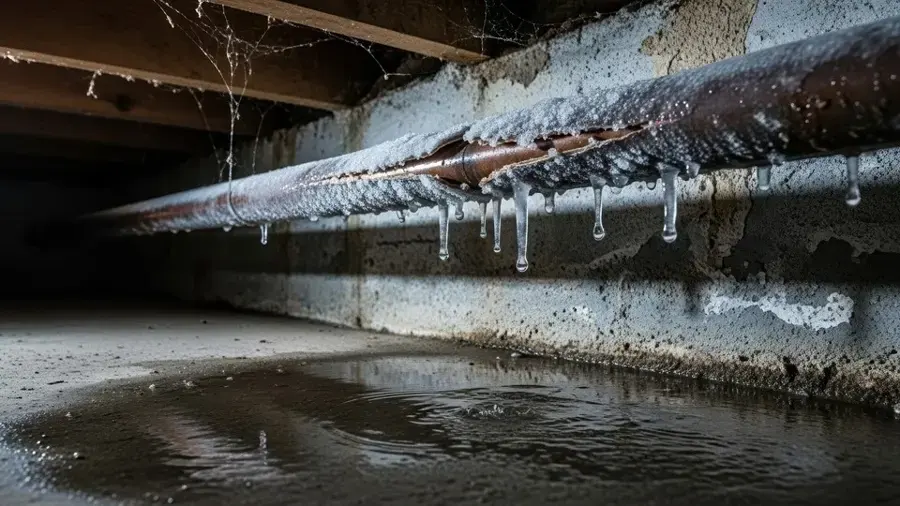
First steps for frozen pipe cleanup in Keller
What to do when a frozen line starts running.
- 1
Shut the main
Close the main shutoff as soon as a split starts running.
- 2
Open faucets
Let thawing water drain out of the lines instead of into the house.
- 3
Stay clear of wet ceilings
A sagging ceiling can drop; keep people and pets away.
- 4
Photograph every split
Record each leak and the rooms it reached for the claim.
How frozen pipe cleanup is handled in Keller
Find every split, then dry ceilings, walls and floors.
Rapid local response
Keller water damage pros answer day or night and head out with pumps, air movers and meters loaded, because the first hours decide how much drywall and flooring has to come out.
IICRC S500 drying standard
The drying team works to IICRC S500, the industry drying standard: moisture mapping first, then drying until wet materials read within 2 to 4 points of a dry reference.
Claim-ready documentation
The mitigation team records the moisture map, daily readings and timestamped photos before any demolition, the file an adjuster actually reads.
North Tarrant water experts
Slab leaks on expansive clay, attic water heaters, condensate pans and spring hail are the losses local restoration pros see most, so the plan fits a Keller house.
What does frozen pipe cleanup cost in Keller, TX?
In Keller, TX, frozen pipe cleanup typically runs $1,500 to $7,000, depending on how many lines split, whether attic insulation and ceilings got wet, the material class and how fast drying started.
Ranges depend on the water category, square footage, material class and how fast drying started. Run the numbers with the water damage cost calculator.
The frozen pipe cleanup dry-out, stop by stop
- 1
Map the moisture
The tech who does the walkthrough maps moisture with thermal imaging and pinless meters before any equipment goes down.
- 2
Extract
The extraction crew pulls standing water with truck-mounted units, so the water leaves the house instead of moving to the next room.
- 3
Dry the structure
The drying team sets air movers to each room's evaporation load and runs LGR dehumidifiers, with desiccants for Class 4 materials.
- 4
Verify and document
The crew logs readings daily and pulls equipment only when the wet materials reach the drying goal, not when they look dry.
Keller homes are built for heat, not for cold. Supply lines in attics, garages and exterior walls often have little insulation, and in a hard freeze the water inside them turns to ice and splits the pipe. The damage shows up during the thaw, when the ice melts and the split line starts running, sometimes in several places at once.
Why freezes hit Keller homes hard
The February 2021 winter storm showed how many north Tarrant County homes have lines in cold spots. Attic lines feeding upstairs baths, lines along north-facing exterior walls, and pipes in garages and above ceilings of unheated spaces all froze. The National Weather Service cold safety page explains how quickly exposed pipes freeze when temperatures stay below freezing.
- Attic lines above bedrooms and baths
- Exterior walls on the north side
- Garage walls and ceilings
- Hose bibs and irrigation backflow assemblies
How frozen pipe cleanup is handled
The first step is finding every split, because one freeze often opens more than one line. After the plumber repairs them, the tech who does the walkthrough maps moisture through ceilings and walls with thermal imaging. Water from an attic split soaks blown-in insulation and ceiling drywall; the drying team decides whether the ceiling can dry in place or has to come down.
The extraction crew pulls standing water from floors, and air movers and LGR dehumidifiers go in for the structure. In winter the house is cold, which slows evaporation, so the drying team manages temperature as well as humidity. Readings continue daily until the materials match a dry reference.
Wet blown-in attic insulation packs down and holds water against the ceiling drywall. It usually has to be removed so the ceiling can dry.
Preventing the next freeze loss
Insulating attic and exterior wall lines, dripping faucets on outside walls during a hard freeze, and knowing where the main shutoff is all cut the risk. Ready.gov winter weather page covers preparing a home for winter storms. For the claim, the mitigation team keeps the moisture map, readings and photos in one file; coverage depends on your policy, so check with your own insurer.
Frozen Pipe Cleanup across Keller and north Tarrant County
From Old Town Keller to Heritage, Southlake and Watauga, the restoration team runs extraction and drying across every nearby ZIP.
The Keller restoration crew works the 76248 and 76244 ZIP codes and the neighboring towns of north Tarrant County, day or night.
Coverage runs across Keller, Heritage, Park Glen, Southlake, Colleyville, Westlake, Watauga, North Richland Hills, Roanoke and Trophy Club.
See every Keller area and ZIP coveredFrozen Pipe Cleanup questions in Keller, TX
What should I do if pipes froze but have not burst yet?
Open faucets so thawing water has somewhere to go, warm the area gently with safe heat, and know where the main shutoff is. Never use an open flame on a pipe.
Why did the leak show up days after the freeze?
Ice plugs the split while it is frozen. When it thaws, the line starts running, often in an attic or wall where it is not seen right away.
Does wet attic insulation have to be replaced?
Usually. Wet blown-in insulation compacts and holds water against the ceiling, so it is removed to let the ceiling dry.
How long does drying take after a freeze burst?
Often four to seven days, because cold houses dry more slowly and ceilings and insulation are involved.
Is frozen pipe damage covered in Texas?
Sudden water damage from a frozen pipe is often covered if the home was reasonably heated. Coverage depends on your policy, so check with your own insurer.
How can I prevent frozen pipes in Keller?
Insulate attic and exterior wall lines, seal gaps near pipes, drip faucets on outside walls in a hard freeze and keep the heat on.
Thaw turned into a leak?
Freeze splits often open in several places. A moisture map finds them all before drywall starts to fail.