Storm Flooding Cleanup in Keller, TX
A stalled North Texas thunderstorm can drop inches of rain in an hour, and low lots near Big Bear Creek take the runoff. The restoration team handles storm water as the contaminated water it is.
(888) 527-9134 Get storm water out of the Keller house now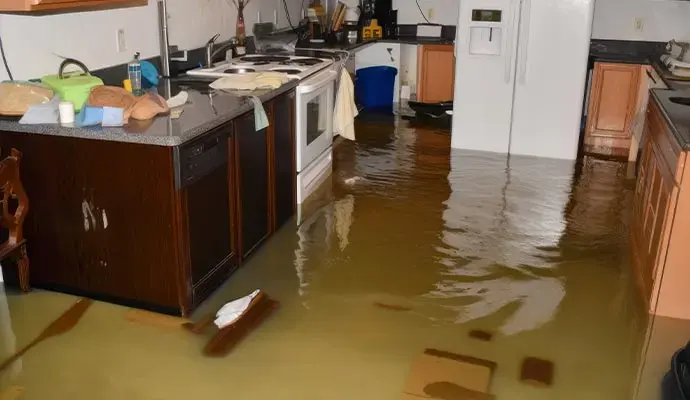
First steps for storm flooding cleanup in Keller
What to do when storm water comes inside.
- 1
Stay out of the water
Floodwater is contaminated and may be near live outlets.
- 2
Cut power if safe
Turn off breakers to flooded areas only if the panel is dry and reachable.
- 3
Mark and photograph the water line
Record the height on walls and furniture before cleanup.
- 4
Keep children and pets away
Close off flooded rooms until they are cleaned.
How storm flooding cleanup is handled in Keller
Treat it as Category 3: remove porous materials, clean, then dry.
Rapid local response
Keller water damage pros answer day or night and head out with pumps, air movers and meters loaded, because the first hours decide how much drywall and flooring has to come out.
IICRC S500 drying standard
The drying team works to IICRC S500, the industry drying standard: moisture mapping first, then drying until wet materials read within 2 to 4 points of a dry reference.
Claim-ready documentation
The mitigation team records the moisture map, daily readings and timestamped photos before any demolition, the file an adjuster actually reads.
North Tarrant water experts
Slab leaks on expansive clay, attic water heaters, condensate pans and spring hail are the losses local restoration pros see most, so the plan fits a Keller house.
What does storm flooding cleanup cost in Keller, TX?
In Keller, TX, storm flooding cleanup typically runs $3,000 to $12,000, depending on how many square feet the water covered, how high it rose, the material class and how fast removal and drying started.
Ranges depend on the water category, square footage, material class and how fast drying started. Run the numbers with the water damage cost calculator.
The storm flooding cleanup dry-out, stop by stop
- 1
Map the moisture
The tech who does the walkthrough maps moisture with thermal imaging and pinless meters before any equipment goes down.
- 2
Extract
The extraction crew pulls standing water with truck-mounted units, so the water leaves the house instead of moving to the next room.
- 3
Dry the structure
The drying team sets air movers to each room's evaporation load and runs LGR dehumidifiers, with desiccants for Class 4 materials.
- 4
Verify and document
The crew logs readings daily and pulls equipment only when the wet materials reach the drying goal, not when they look dry.
Keller is not a river town, but severe spring and fall thunderstorms can stall over north Tarrant County and dump heavy rain in a short time. Big Bear Creek and its tributaries rise fast, low crossings flood, and water runs across yards toward homes on lower lots, into garages and under exterior doors. Poor grading and clogged gutters add to it.
Why floodwater is handled as Category 3
Water that has run across yards, streets and drainage channels carries soil, sewage and chemicals. It is Category 3 the moment it enters the house. Porous materials it touched, such as carpet, pad, drywall and insulation, get removed, not dried. The EPA flood cleanup and indoor air guidance explains the health side of flood cleanup, and the National Weather Service flood safety page covers flood safety.
- Garage and ground-floor flooding at the slab edge
- Water under exterior doors and through weep holes
- Runoff from uphill lots and clogged drainage swales
- Window wells and low patios that overflow
How storm flooding cleanup is handled
Safety comes first: power off to flooded areas and no walking through water near outlets. The tech who does the walkthrough maps how far the water reached, including under baseboards and into wall cavities. The extraction crew removes standing water and silt with truck-mounted units.
Crews in protective gear then remove carpet, pad and drywall to a line above the water mark, with containment and HEPA air scrubbers where needed. Remaining surfaces are cleaned and treated with an EPA-registered antimicrobial, then the drying team dries the slab, framing and wall cavities with air movers and LGR dehumidifiers until readings reach the drying goal.
Floodwater from outside is usually a flood insurance matter, not a standard homeowners claim. Documentation still matters for either one.
Flood insurance and documentation
Rising surface water is typically covered by a separate flood policy, not a homeowners policy. The mitigation team records the water line, the moisture map, removed materials and daily readings with timestamped photos. Coverage depends on your policy, so it is worth checking with your own insurer. If the storm also damaged the roof, see hail damage roof leak cleanup.
Storm Flooding Cleanup across Keller and north Tarrant County
From Old Town Keller to Heritage, Southlake and Watauga, the restoration team runs extraction and drying across every nearby ZIP.
The Keller restoration crew works the 76248 and 76244 ZIP codes and the neighboring towns of north Tarrant County, day or night.
Coverage runs across Keller, Heritage, Park Glen, Southlake, Colleyville, Westlake, Watauga, North Richland Hills, Roanoke and Trophy Club.
See every Keller area and ZIP coveredStorm Flooding Cleanup questions in Keller, TX
Is storm floodwater dangerous?
Yes. Floodwater is Category 3 and can carry sewage, soil and chemicals. Avoid contact and keep children and pets away.
Can carpet be saved after a flood?
No for carpet and pad touched by floodwater. Porous materials that Category 3 water touched are removed, not dried.
How high does drywall get cut after a flood?
Usually a short distance above the highest water mark or wicking line, set by the moisture map.
Does homeowners insurance cover flooding?
Rising surface water is usually covered by a separate flood policy. Coverage depends on your policy, so check with your own insurer.
How long does it take to dry after a flood?
Often five to seven days after removal and cleaning, longer for slab edges and dense materials.
What should I do right after floodwater gets in?
Turn off power to flooded areas if safe, stay out of the water, photograph everything and get extraction started.
Storm water inside the house?
Floodwater is Category 3. Extraction, removal and cleaning have to happen before the drying can.