Structural Drying and Dehumidification in Keller, TX
Surface-dry is not dry. The drying team measures framing, drywall, slab edges and flooring and keeps the equipment running until the readings match a dry reference.
(888) 527-9134 Start the Keller dry-out now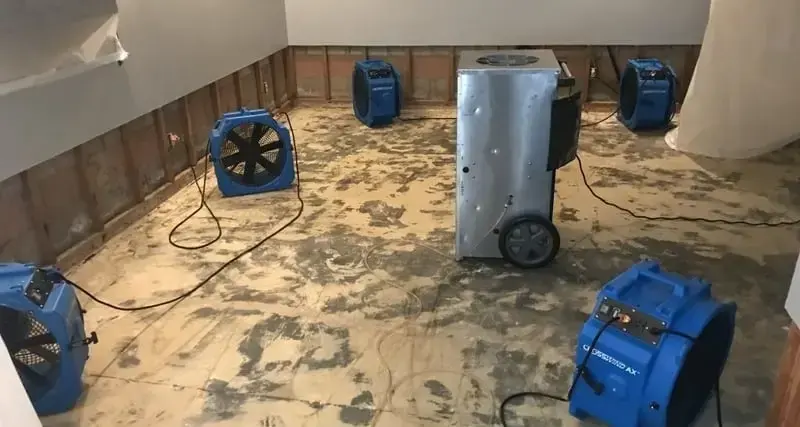
First steps for structural drying in Keller
What to do while the drying equipment is running.
- 1
Do not turn off equipment
Keep air movers and dehumidifiers running around the clock unless told otherwise.
- 2
Keep doors and windows closed
Outside air, especially humid spring air, slows the drying.
- 3
Keep the AC running
In summer the AC helps; set it to a steady comfortable temperature.
- 4
Stay off drying floors
Keep traffic off wet carpet and exposed slab while it dries.
How structural drying is handled in Keller
Map, set equipment to the load, read daily, verify the goal.
Rapid local response
Keller water damage pros answer day or night and head out with pumps, air movers and meters loaded, because the first hours decide how much drywall and flooring has to come out.
IICRC S500 drying standard
The drying team works to IICRC S500, the industry drying standard: moisture mapping first, then drying until wet materials read within 2 to 4 points of a dry reference.
Claim-ready documentation
The mitigation team records the moisture map, daily readings and timestamped photos before any demolition, the file an adjuster actually reads.
North Tarrant water experts
Slab leaks on expansive clay, attic water heaters, condensate pans and spring hail are the losses local restoration pros see most, so the plan fits a Keller house.
What does structural drying and dehumidification cost in Keller, TX?
In Keller, TX, structural drying and dehumidification typically runs $1,000 to $5,500, depending on the Class of the loss, the square footage, the water category, how many equipment days it takes and how fast drying started.
Ranges depend on the water category, square footage, material class and how fast drying started. Run the numbers with the water damage cost calculator.
The structural drying dry-out, stop by stop
- 1
Map the moisture
The tech who does the walkthrough maps moisture with thermal imaging and pinless meters before any equipment goes down.
- 2
Extract
The extraction crew pulls standing water with truck-mounted units, so the water leaves the house instead of moving to the next room.
- 3
Dry the structure
The drying team sets air movers to each room's evaporation load and runs LGR dehumidifiers, with desiccants for Class 4 materials.
- 4
Verify and document
The crew logs readings daily and pulls equipment only when the wet materials reach the drying goal, not when they look dry.
Structural drying is the part of water damage restoration that decides whether the job lasts. Water that gets into drywall, framing, slab edges and flooring does not leave just because the surface feels dry. If it stays, it swells wood, loosens flooring and feeds mold. The drying team works to IICRC S500, the industry drying standard, and proves the result with readings.
How a drying plan is built
Before any equipment goes down, the tech who does the walkthrough maps moisture with a pinless meter, a pin meter and thermal imaging, and records a dry reference: an unaffected piece of the same material elsewhere in the house. The Class of the loss, 1 through 4, sets how much equipment a room needs.
- Class 1: part of a room, low-porosity materials, little evaporation load
- Class 2: a whole room, carpet and walls wet to about two feet
- Class 3: ceilings, walls and insulation soaked, the largest evaporation load
- Class 4: dense materials like hardwood, plaster and concrete that need low humidity and time
The equipment and why it works
Air movers push air across wet surfaces to move moisture into the air. LGR dehumidifiers, which stands for low grain refrigerant, pull that moisture back out of the air even in humid North Texas conditions. For Class 4 materials, desiccant dehumidifiers create the very dry air that hardwood and concrete need. Wall cavities get dried through small holes or with injection systems that push dry air inside.
Crews take psychrometric readings, temperature and humidity, daily along with material readings, and adjust the equipment as the room dries. The EPA indoor air quality pages explains how indoor humidity affects a home, and the EPA guide to mold, moisture and your home covers why drying within 24 to 48 hours matters.
The drying goal is not a date. Equipment comes out when wet materials read within 2 to 4 points of the dry reference, not when a set number of days has passed.
Drying logs and the claim file
Daily readings are the proof an adjuster looks for: the moisture map from day one, the psychrometric log, the equipment count and the final readings at the goal. Coverage depends on your policy, so check with your own insurer. Drying applies to every loss on this list, from slab leaks to emergency extraction.
Structural Drying and Dehumidification across Keller and north Tarrant County
From Old Town Keller to Heritage, Southlake and Watauga, the restoration team runs extraction and drying across every nearby ZIP.
The Keller restoration crew works the 76248 and 76244 ZIP codes and the neighboring towns of north Tarrant County, day or night.
Coverage runs across Keller, Heritage, Park Glen, Southlake, Colleyville, Westlake, Watauga, North Richland Hills, Roanoke and Trophy Club.
See every Keller area and ZIP coveredStructural Drying and Dehumidification questions in Keller, TX
What is structural drying?
Drying the building itself, framing, drywall, slab and flooring, to a measured goal instead of just drying the surface.
What does the IICRC S500 drying goal mean?
Wet materials are dried until they read within 2 to 4 points of a dry reference, an unaffected piece of the same material in the same house.
Why do I need dehumidifiers if fans are running?
Fans move moisture into the air. Without dehumidifiers the humidity climbs and the drying stalls. LGR dehumidifiers pull that moisture out.
How many air movers does a room need?
The Class of the loss and the wet square footage decide it. Class 3 rooms with wet ceilings and walls need the most.
How long does structural drying take?
A Class 1 or Class 2 loss usually dries in three to five days. Class 4 materials like hardwood and concrete take longer.
Can I turn the equipment off at night?
It is best not to. Drying depends on steady airflow and dehumidification, and turning it off lets humidity climb back.
What are drying logs?
Daily records of material readings, temperature and humidity that show the drying progress and prove the goal was reached.
Surface dry is not dry.
Framing, drywall and slab edges hold water long after they feel dry. Readings decide when the job is done.