Emergency Water Extraction in Keller, TX
Standing water on a slab floor wicks into baseboards, drywall and cabinet bases within hours. The extraction crew pulls it out with truck-mounted units, then the drying team takes over.
(888) 527-9134 Call now for emergency water removal in Keller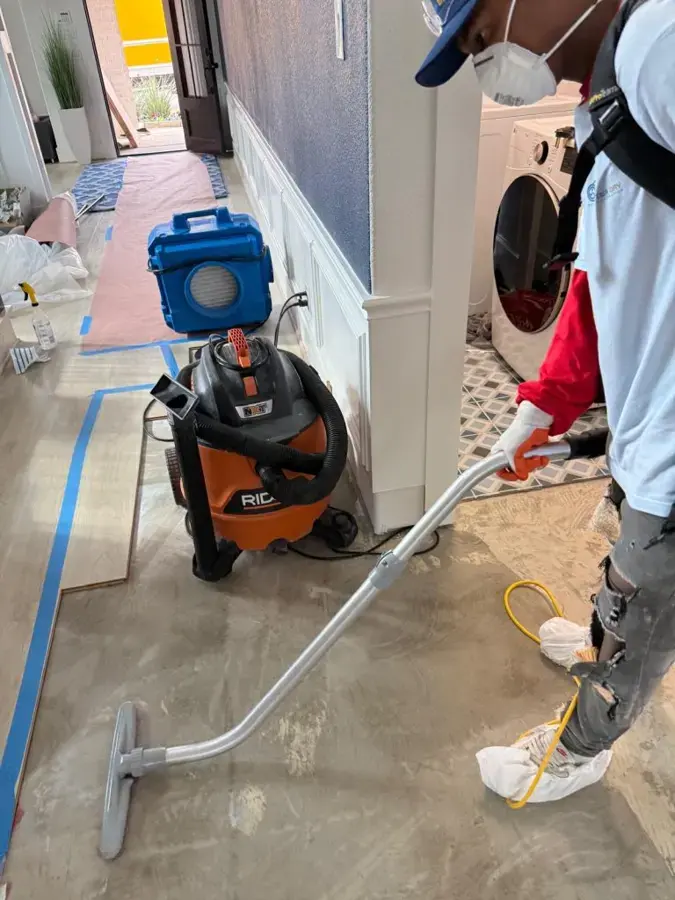
First steps for water extraction in Keller
What to do while the water is still on the floor.
- 1
Stop the source
Close the main shutoff or the fixture valve so no new water reaches the floor.
- 2
Protect yourself
Stay out of standing water near outlets and switch off breakers to wet rooms if the panel is dry.
- 3
Document it
Photograph the water line on walls and furniture before anything is moved.
- 4
Lift what you can
Get rugs, boxes and electronics off the floor and put foil under furniture legs.
How water extraction is handled in Keller
Extraction first, then drying that is measured, not guessed.
Rapid local response
Keller water damage pros answer day or night and head out with pumps, air movers and meters loaded, because the first hours decide how much drywall and flooring has to come out.
IICRC S500 drying standard
The drying team works to IICRC S500, the industry drying standard: moisture mapping first, then drying until wet materials read within 2 to 4 points of a dry reference.
Claim-ready documentation
The mitigation team records the moisture map, daily readings and timestamped photos before any demolition, the file an adjuster actually reads.
North Tarrant water experts
Slab leaks on expansive clay, attic water heaters, condensate pans and spring hail are the losses local restoration pros see most, so the plan fits a Keller house.
What does emergency water extraction cost in Keller, TX?
In Keller, TX, emergency water extraction with the first days of drying typically runs $750 to $3,500, depending on the water category, the square footage, the material class and how long the water sat.
Ranges depend on the water category, square footage, material class and how fast drying started. Run the numbers with the water damage cost calculator.
The water extraction dry-out, stop by stop
- 1
Map the moisture
The tech who does the walkthrough maps moisture with thermal imaging and pinless meters before any equipment goes down.
- 2
Extract
The extraction crew pulls standing water with truck-mounted units, so the water leaves the house instead of moving to the next room.
- 3
Dry the structure
The drying team sets air movers to each room's evaporation load and runs LGR dehumidifiers, with desiccants for Class 4 materials.
- 4
Verify and document
The crew logs readings daily and pulls equipment only when the wet materials reach the drying goal, not when they look dry.
Extraction is the first move on almost every Keller water loss. On a slab home there is no crawlspace for water to drain into, so whatever reaches the floor spreads sideways under carpet, laminate and baseboards until it is pulled out. The faster the extraction crew removes the bulk water, the less the drying team has to chase later.
Why fast extraction matters on Keller slab floors
A pound of water left in carpet pad or drywall takes far more energy to evaporate than a pound pulled out with a wand. That is why the restoration pros treat extraction as the cheapest drying there is. Most Keller homes built in the 1990s and 2000s have carpet over a concrete slab in the living areas and tile or laminate in kitchens and baths, so the water tends to pool at the slab edges and under cabinets.
- Carpet and pad hold several gallons per square yard once saturated
- Laminate swells at the seams if water sits under it
- Baseboards and the bottom of drywall wick water upward
- Cabinet toe kicks trap water against the slab
How the extraction crew works a flooded room
The tech who does the walkthrough first confirms the source is stopped, sets the water category and maps where the water went with thermal imaging and a pinless meter. Then the extraction crew runs truck-mounted units, which send the water straight out to the truck instead of into a tank that fills every few minutes. Weighted extraction tools pull water out of carpet pad that surface wands miss.
After extraction, the drying team decides what stays and what goes. Clean-water carpet can often be dried in place; pad soaked by gray water usually comes out. Air movers and LGR dehumidifiers go in sized to the room, and readings start that day. Drying details are on the structural drying page.
Category 1, 2 and 3 water are handled differently. Clean supply-line water can often be dried in place, while sewage or storm water means porous materials get removed, not dried.
Extraction, mold risk and the claim file
Mold can begin to grow on wet materials within 24 to 48 hours, which is why the EPA guide to mold, moisture and your home stresses drying wet materials quickly. For the claim, the mitigation team records the moisture map, the volume of water removed, daily readings and timestamped photos before anything is torn out. Floodwater from outside is a different kind of claim; Ready.gov flood safety page explains flood safety before anyone walks into it.
If the water came from a slab leak or a burst line, the related pages cover slab leak water damage and burst pipe cleanup in more detail.
Emergency Water Extraction across Keller and north Tarrant County
From Old Town Keller to Heritage, Southlake and Watauga, the restoration team runs extraction and drying across every nearby ZIP.
The Keller restoration crew works the 76248 and 76244 ZIP codes and the neighboring towns of north Tarrant County, day or night.
Coverage runs across Keller, Heritage, Park Glen, Southlake, Colleyville, Westlake, Watauga, North Richland Hills, Roanoke and Trophy Club.
See every Keller area and ZIP coveredEmergency Water Extraction questions in Keller, TX
How fast should water be extracted after a leak in Keller?
As early as possible. Water keeps wicking into baseboards, drywall and cabinet bases every hour it sits, and mold can start within 24 to 48 hours, so extraction is the priority on any active loss.
Can a wet-vac do the job?
A wet-vac removes surface water slowly and misses water in carpet pad and at slab edges. Truck-mounted extraction and weighted tools pull far more water out, which shortens drying.
Will the carpet have to be thrown out?
Not always. Carpet soaked by clean water and extracted early can often be dried in place. Pad soaked by gray or black water usually comes out.
What happens right after extraction?
The drying team sets air movers and LGR dehumidifiers sized to each room and starts daily moisture readings until materials reach the drying goal.
Is water extraction covered by insurance?
Extraction after a sudden and accidental leak is usually part of the mitigation a homeowners policy covers. Coverage depends on your policy, so check with your own insurer.
Do I need to move furniture before extraction?
Lift what you safely can off the wet floor and photograph it first. The crew moves and blocks heavy furniture so it does not stain or wick water.
Water still on the floor?
Every hour counts on a slab floor. Truck-mounted extraction pulls the water out before it wicks into walls and cabinets.